The Adriatic offers exceptional local produce – but it punishes late decisions. A practical guide for chefs and pursers on sourcing, timing, hub strategy, and the import rules that catch first-time visitors every season.
For a superyacht chef, provisioning on the Adriatic coast is genuinely rewarding. Croatia and Montenegro offer exceptional local produce: fresh Adriatic seafood, Dalmatian olive oil, Montenegrin lamb, premium wines from the Pelješac peninsula, local dairy and seasonal vegetables that rival anything in the Mediterranean.
For pursers managing provisioning across itineraries that move between islands, remote anchorages and main hubs, the challenge is less about quality and more about timing and logistics. Both Croatia and Montenegro punish last-minute provisioning decisions in ways that mainland Mediterranean destinations do not.
Provisioning is rarely about availability – it is about timing and coordination. Late decisions, fragmented orders and poor planning create unnecessary pressure onboard and expense on your budget sheet.
Croatia: Strong Hubs, Remote Island Limitations and EU Import Framework
🇭🇷 CROATIA — High Quality · EU Supply · Island Logistics are Mainland-Dependent
Croatia offers high-quality provisioning with strong local produce and a growing range of premium international goods at the main hubs. The EU supply chain means imports from other EU countries move freely without customs complications. Non-EU imports require advance planning and customs clearance.
The critical planning variable in Croatia is geography. The quality of provisioning is heavily location-dependent. The main hubs perform well. Remote island locations depend entirely on mainland logistics.
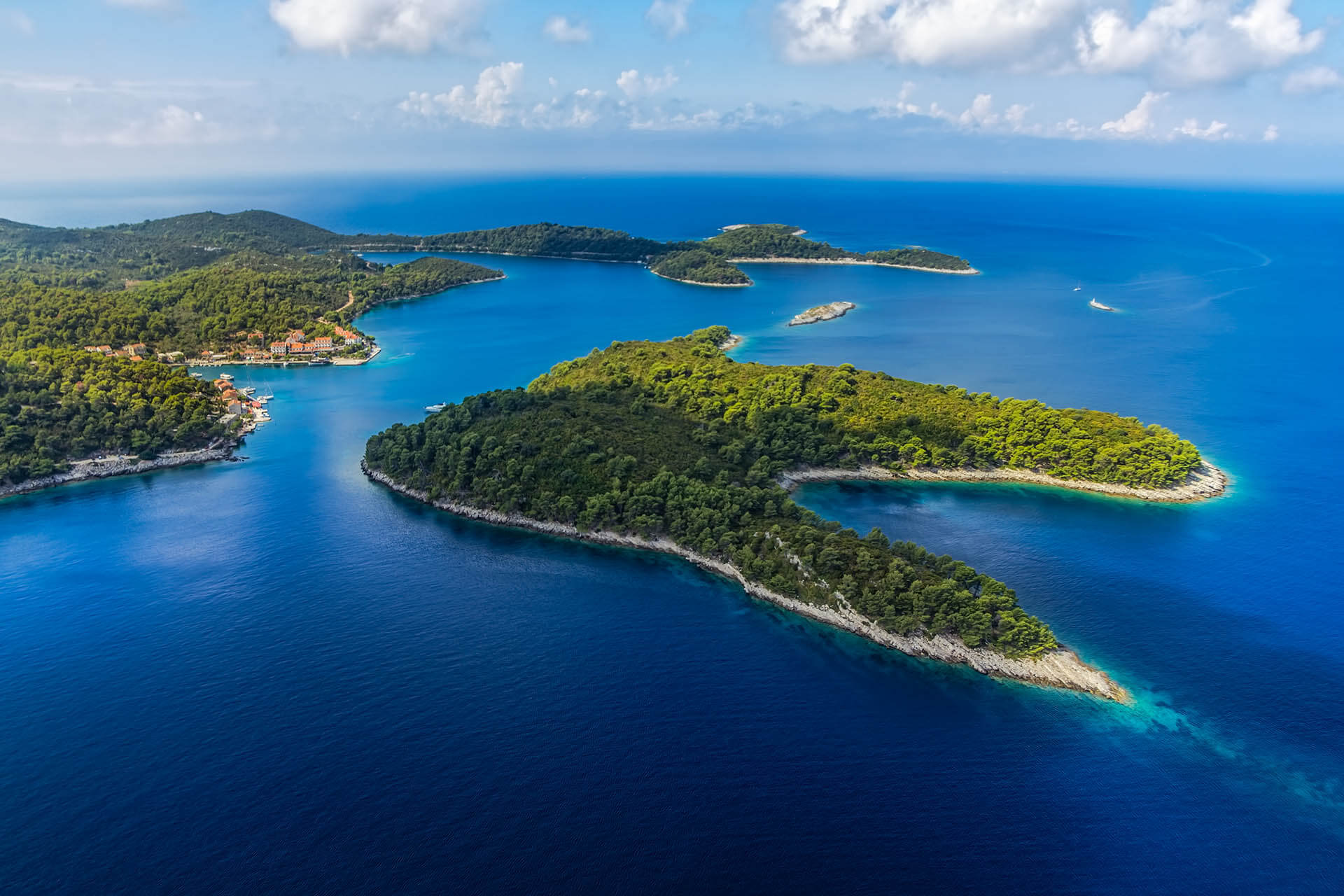
Croatia’s Strongest Provisioning Hubs
- Split: the strongest all-round hub in Croatia for superyacht provisioning – best combination of quality, volume, specialist suppliers and logistics infrastructure
- Dubrovnik: excellent quality and growing premium range; higher pricing and some logistical constraints at old city ports
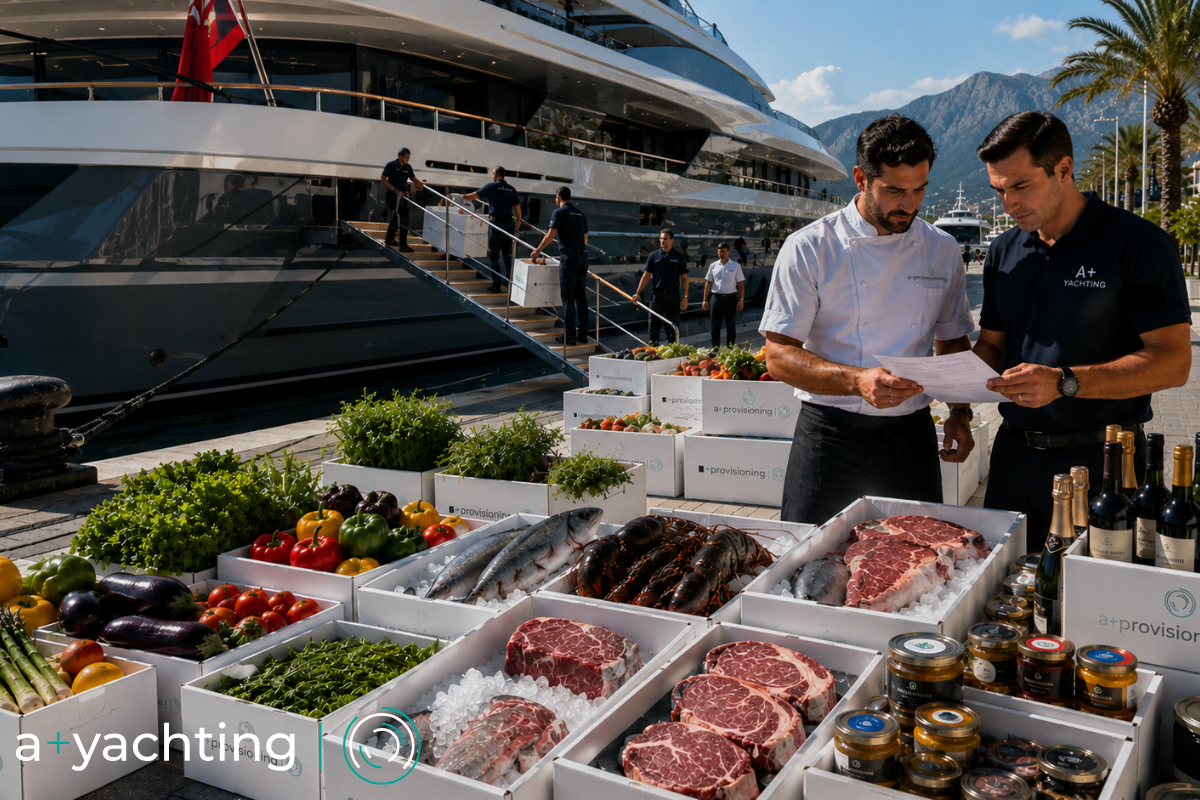
- Zadar: strong hub for north-coast itineraries; less congested than Split or Dubrovnik, well-suited for vessels heading toward the Kornati islands
Remote Islands: What You Cannot Rely On
Islands including Vis, Lastovo and Mljet operate on mainland logistics. They cannot independently fulfil premium provisioning requests, specialty protein orders or large consolidated provisions. If your itinerary includes extended time in remote island waters, provisioning strategy must be built around hub-loading before departure, not island top-up on arrival.
Chef Advisory: Provision fully in Split or Dubrovnik before any extended island sequence. Remote Croatian islands in peak season – July and August especially cannot reliably supply specialty items, premium proteins or wines at short notice. Use island stops for fresh local catch and seasonal produce top-ups, not as primary provisioning points.
Lead Times in Croatia
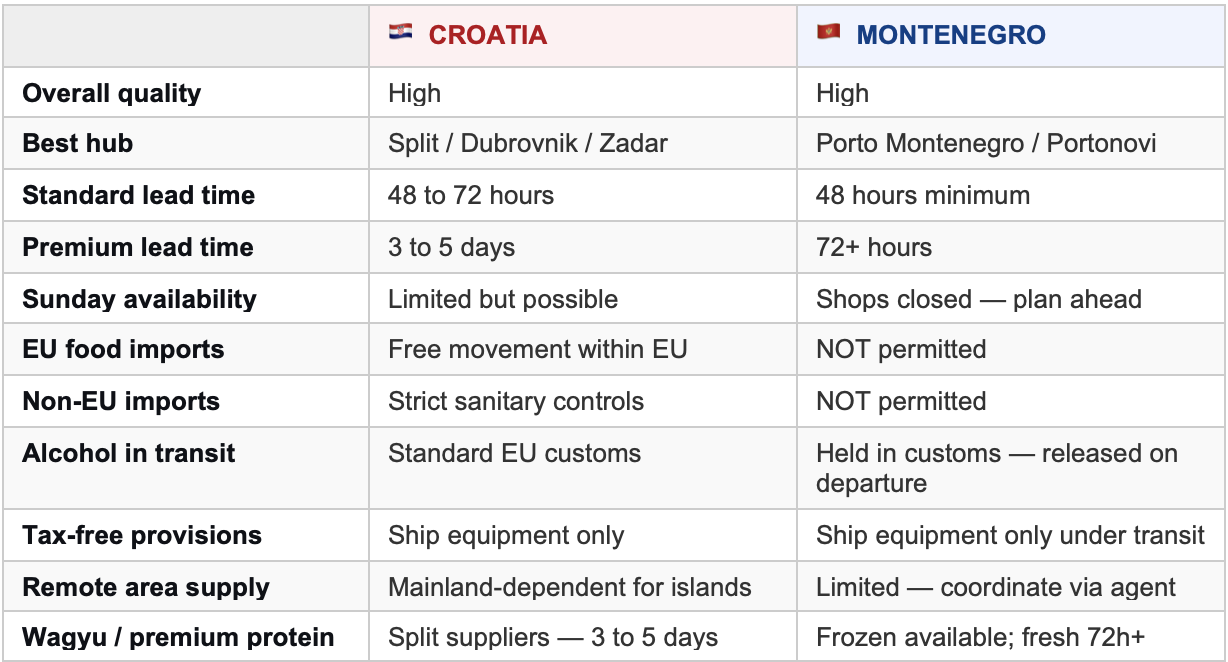
- Standard orders: 48 to 72 hours
- Premium and specialty items – Wagyu, specialty wines, imported proteins: 3 to 5 days
- Imported goods from outside the EU: up to 1 week – add customs clearance buffer
- Last-minute orders: possible but expensive – do not plan around this as a strategy
Import Rules and Restrictions
- EU-to-EU food imports: free movement – no customs complications
- Delivery at Croatian commercial ports: may require permits for certain goods – coordinate through agent
- Non-EU food imports: strict sanitary controls – plan significantly further ahead
- Tax-free supplies in Croatia: limited to ship equipment and spare parts – not provisions
Difficult Items to Source
- Wagyu and Kobe beef: available from select Split suppliers with 3 to 5 day lead time
- Niche international brands without EU distribution
- Exotic fruits outside standard EU supply lines
- Specialty non-EU wines
Best Provisioning Strategy for Croatian Waters
Advance menu planning before the season, consolidated ordering through a single trusted provisioning partner, and a clear separation between hub-sourced items and island-sourced items. Fragmented ordering across multiple suppliers consistently produces higher costs and lower reliability. A single provisioner who knows both the mainland hubs and the island logistics will outperform multiple local suppliers every time.
Montenegro: Solid Quality, Strict Import Rules and the Sunday Problem
🇲🇪 MONTENEGRO – Non-EU · Food Import Ban · Porto Montenegro Hub · Sunday Closures
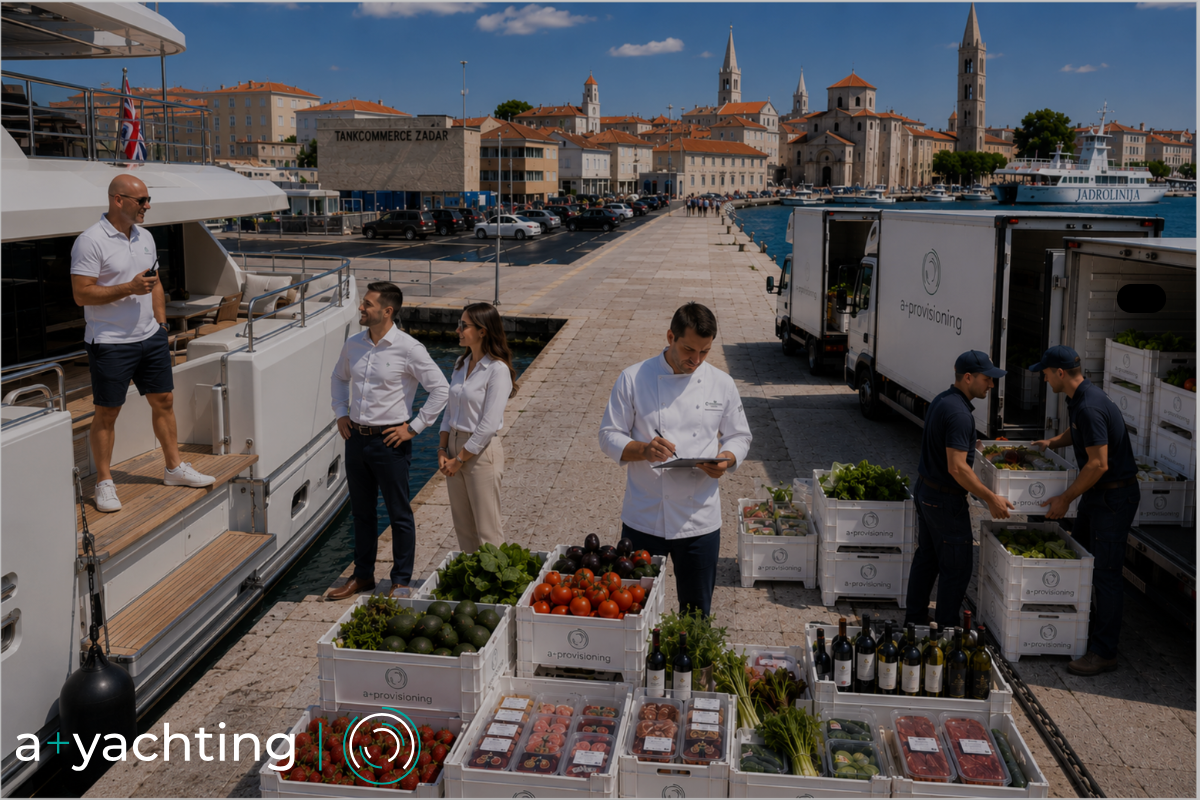
Montenegro’s provisioning infrastructure is solid and professional at the main hubs. Porto Montenegro and Portonovi in Boka Bay are well-served by experienced provisioning companies that understand superyacht requirements. The local produce is excellent – fresh Adriatic and Bay of Kotor seafood, Montenegrin lamb, dairy, and seasonal vegetables are all of high quality.
Premium international goods are available but require advance coordination. Premium provisioners are spread across the country rather than concentrated at a single hub, which means proactive planning matters more than in Croatia.
Best Provisioning Areas
- Porto Montenegro, Tivat: primary hub – broadest range, most reliable for specialty items, best logistics infrastructure
- Portonovi, Boka Bay: strong secondary option, well-suited for yachts berthed in the bay
Lead Times
- Standard orders: minimum 48 hours
- Premium and specialty items: 72 hours or more to allow sourcing and consolidation
- Shops are closed throughout Montenegro on Sundays – this is country-wide, not selective
The Import Rules: The Most Important Thing to Know Before You Cross the Border
Montenegro has import restrictions that catch out first-time visitors, including experienced superyacht crews. These rules are enforced at the border without exception:
- Food and flowers CANNOT be imported into Montenegro from any country, including Croatia
- This applies to all food products without exception, whether for crew use or guest service
- Alcohol CAN be shipped in transit but is held in customs storage and released to the yacht only upon departure from Montenegro
If you are planning to bring food provisions across from Croatia into Montenegro – specialty items, premium proteins, any food at all – they will be stopped at the border. Source locally or order through a Montenegro provisioning partner with sufficient lead time.
Tax-Free Supply Delivery
Tax-free supply delivery is available for ship equipment and spare parts under transit procedures. For these items, the invoice must include: exact delivery address and full item list with quantities and values. Advance submission for verification is strongly recommended. Customs documentation: commercial invoice and yacht stamp.
Difficult Items and What to Do About Them
High-end fresh meats, including Wagyu and Kobe beef, are difficult to source last-minute in Montenegro. Frozen alternatives are generally available from main provisioning suppliers. For programmes requiring premium fresh proteins, coordinate at least 72 hours in advance with both the agent and the provisioner – not 48, not the day before.
For Chefs: Montenegro’s local seafood from the Adriatic and Bay of Kotor, lamb, and seasonal produce are exceptional and should anchor the menus in Montenegrin waters. Build around what the country does well. For premium international items, plan early or source on the Croatian leg before crossing.
Common Provisioning Mistakes in Montenegro
- Attempting to bring food across the border from Croatia – stopped without exception
- Underestimating the Sunday closure – no emergency provisioning on Sundays, country-wide
- Late additions to orders causing delays and cost overruns across all departments
- Planning for alcohol availability without accounting for customs hold on transit alcohol
Croatia vs Montenegro: Provisioning Comparison
A+ Yachting is your dedicated superyacht agent for Croatia and Montenegro. We handle port authority coordination, clearance, bunkering, provisioning, charter licensing, spare parts logistics, and high-end concierge – all from a single point of contact.
Contact Gracija Matijevic: em.gnithcay-a@ajicarg | a-yachting.me