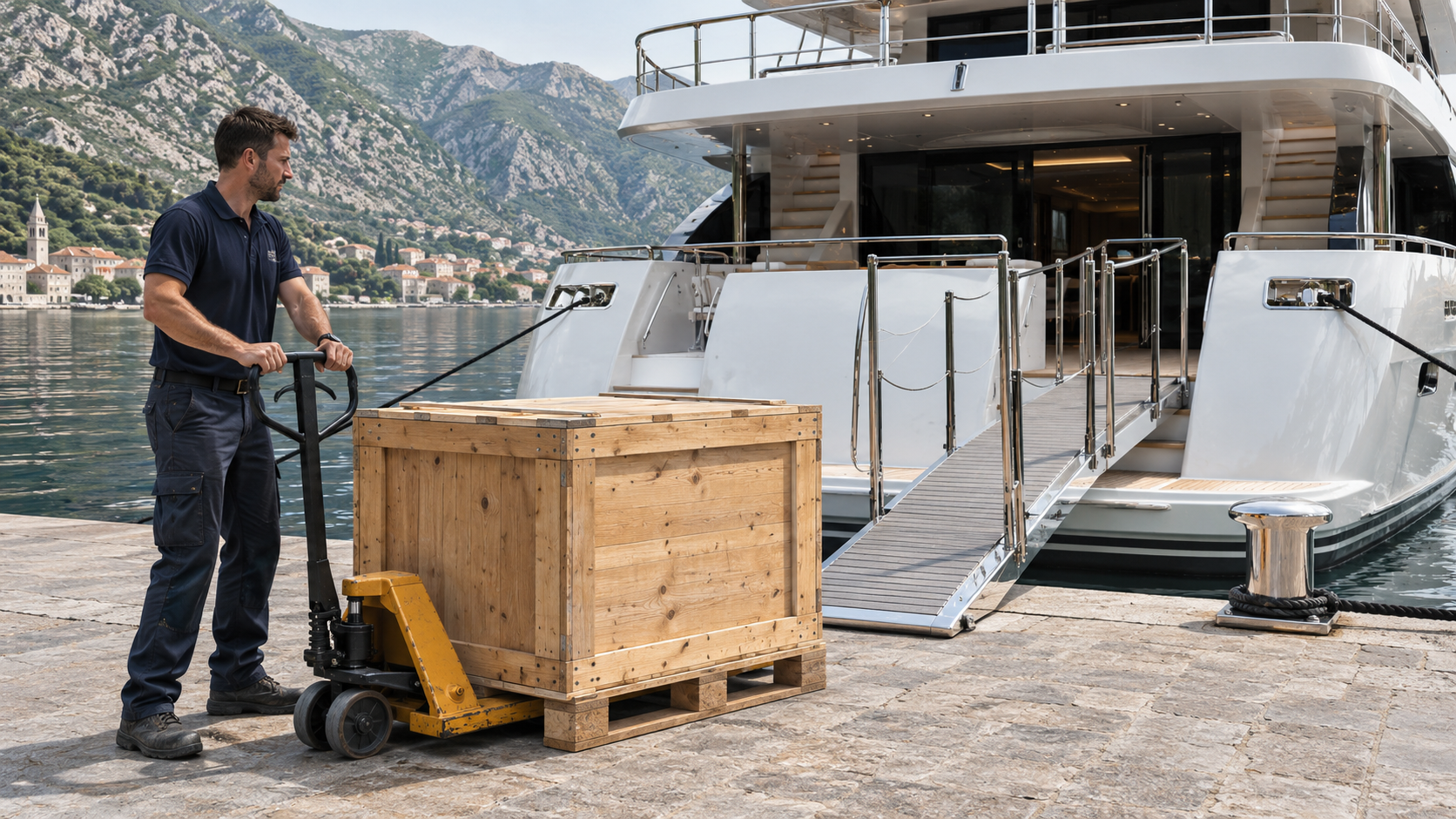
A replacement radar unit may reach Montenegro before the yacht does. A pallet of engine spares may need to go straight to the shipyard. In both cases, the most useful step is to send the supplier’s paperwork to your local agent before the goods are dispatched. This gives the agent time to confirm how the shipment should be addressed, who will handle customs clearance, and when the goods can be delivered onboard.
Montenegro has customs procedures that can allow eligible yacht spare parts and equipment to enter with relief from import duties and taxes. The applicable procedure depends on the yacht’s customs status, what is being shipped, and how the goods will be used or taken out of the country. For example, parts imported to repair a yacht already under temporary admission may themselves qualify for temporary admission. The customs procedure should be confirmed for each shipment.
Choose the right shipping option
The size of the shipment, the deadline and the yacht’s itinerary determine which transport option makes sense.
| Shipping option | When it makes sense | What to confirm before booking |
|---|---|---|
| Dedicated truck | Urgent, heavy or oversized cargo, or a shipment tied to a booked yard slot | Collection and delivery windows, crate dimensions, unloading equipment and the customs handover point |
| Consolidated road freight | Planned maintenance orders, multiple pallets or parts from several suppliers | The consolidation cut-off, whether all pieces will travel together and when they are expected to be available after customs clearance |
| Express courier, such as DHL | Smaller, time-sensitive items such as sensors, electronic components or service kits | Whether the courier can follow the agreed customs instructions, and whether batteries, liquids or other restricted contents need special handling |
For an urgent repair, work backwards from the technician’s appointment. Allow time for the goods to clear customs and reach the yacht or yard after they arrive in Montenegro.
Confirm the consignee and paperwork before dispatch
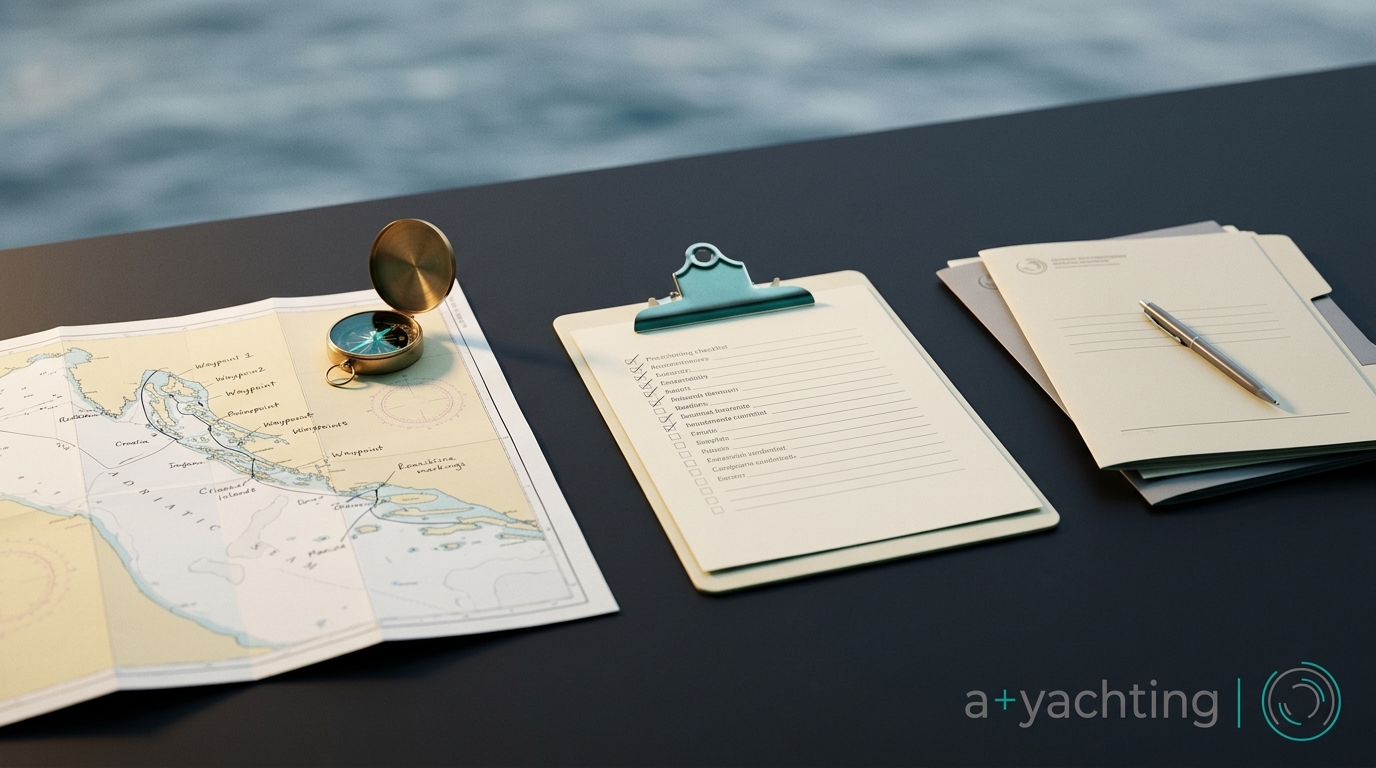
Start by sharing the supplier’s draft invoice and the yacht’s itinerary with A+ Yachting. We can coordinate with the customs representative to confirm who should be named as consignee, who will act as importer or declarant where applicable, and who will submit the declaration. Give the confirmed instructions to the supplier and carrier before they issue the final paperwork. Porto Montenegro also recommends submitting a pro forma invoice for review before dispatch.
For the initial review, have the following ready.
- Supplier paperwork – an itemised invoice or pro forma with descriptions, quantities and values, plus the packing list, package count and weights.
- Yacht details – vessel name and flag, captain or authorised recipient, and expected marina, berth or shipyard.
- Itinerary – expected arrival and departure dates, the intended departure port if known, and the date the parts are needed onboard.
- Purpose of the shipment – identify parts intended for an immediate repair, items being carried onward, and any equipment that will be removed or replaced.
If the shipment is replacing an existing component, discuss what will happen to the old part before work begins. Montenegro’s customs guidance notes that replaced parts or equipment that remain in the country may be subject to import duties and taxes, depending on how they are handled.
What to expect at customs
Budget for a one-time customs clearance service fee when arranging the shipment. Ask for the quote to show whether freight, storage, unloading and final delivery are included or charged separately. This helps the captain compare the full cost of a courier shipment with a consolidated or dedicated truck delivery.
The customs representative can confirm the applicable procedure and any conditions for release before the supplier ships the goods. Give the agent the tracking number or road transport reference as soon as it is issued, especially if the shipment is tied to a yard booking or a short port call.
If the parts arrive before the yacht
For a planned yard period, it can make sense to bring parts into Montenegro ahead of the vessel. A+ Yachting can coordinate receipt and suitable storage where the customs procedure permits it, then arrange release and onward delivery when the yacht is ready to receive the goods.
Confirm the storage arrangement before dispatch, particularly for oversized crates, sensitive electronics and equipment that needs special handling. If the yacht’s arrival date or berth changes, notify the agent so the team can adjust the release and delivery arrangements. Montenegro Customs lists transit, storage and temporary admission as distinct customs procedures, so the arrangement depends on how the shipment is declared.
Delivery onboard and departure handover
Once customs authorises release, the final delivery can be coordinated with the marina or shipyard and the authorised recipient onboard. Share any gate access rules, delivery hours and lifting requirements in advance. A boxed radar component and a crated gearbox may be going to the same yacht, but they need different handover arrangements.
Tenders and water toys handled under this service are delivered only at departure. Share the intended clearance port and departure window early so storage, transport and handover can be scheduled around the yacht’s exit formalities. If the departure port or date moves, tell the agent before the goods are released for delivery.
Arranging a spare parts shipment to Montenegro
Before your supplier books a truck or courier, send the draft invoice, packing details and yacht itinerary to em.gnithcay-a@ofni. Include when you need the goods onboard and where the yacht will be. A+ Yachting can then advise on the shipping route and coordinate customs clearance, storage and delivery around the vessel’s schedule.